Manifesto : Melbourne
Every photograph made today carries traces of the movements that shaped photography between the 1890s and the 1970s. These ways of seeing continue to influence how photographers frame the world, understand light, and construct meaning.
Melbourne : Manifesto is based on this concept and invites viewers to experience Melbourne through the eyes of twenty of history’s most influential photographers from the 1890s to the 1970s.
Photographer Greg Branson re-imagines the city by creating one photograph for each of these masters — each image inspired by their distinctive style, vision, and philosophy.
From the evocative, soft-focus sensibility of Alfred Stieglitz’s pictorialism to the raw immediacy of Daidō Moriyama’s streets, Branson translates their creative essence into Melbourne’s urban language.
Through this series, familiar landmarks such as the National Gallery of Victoria, Queen Victoria Market, and the city’s vibrant dining culture are transformed into scenes of reflection, geometry, and emotion.
These works are not pastiche but homage; each print a study in how vision, temperament, and philosophy shape what we see. Together, they form a collective portrait of Melbourne as muse: restless, reflective, and endlessly photogenic.
All work has been shot on analogue cameras, processed and hand silver gelatin printed by
Greg Branson.
Pictoralism (1890-1915)
Pictorialism sought to establish photography as fine art by imitating painting and printmaking. Photographers used soft focus, manipulation, and atmospheric effects to create expressive, symbolic images. The movement prioritised beauty, mood, and craftsmanship, helping legitimise photography culturally.
Alfred Stieglitz (1864-1946)
American photographer and promoter of modern art.
Stieglitz championed photography as a fine art through galleries and publications like Camera Work. His work and advocacy elevated photography’s cultural status, shaping its acceptance as a serious artistic medium.
By 1907 Stieglitz had transitioned to a modernist style.
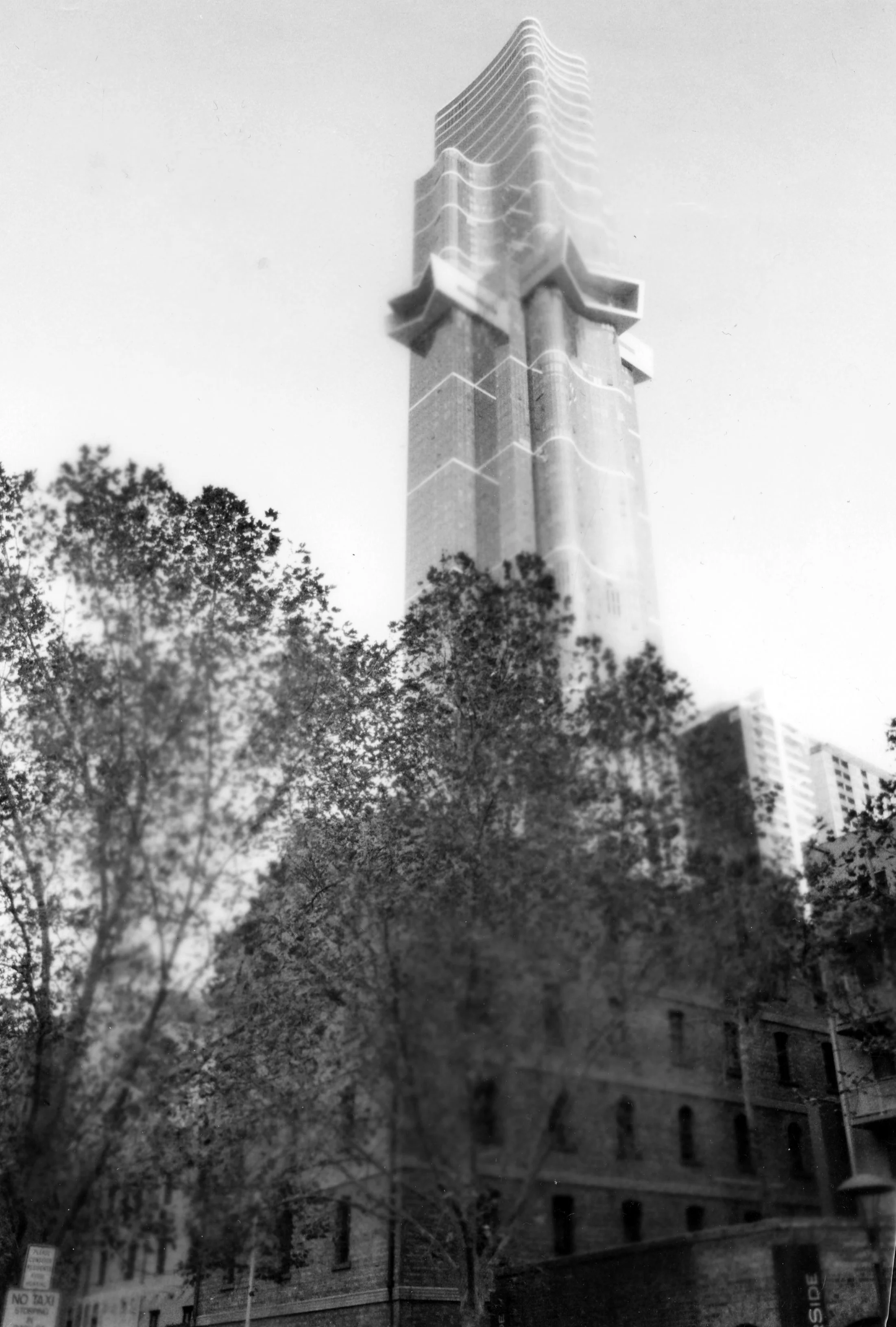
Tower of aspiration
Australia 108 is a 100-story, residential skyscraper in Southbank, Melbourne; the tallest residential tower in the Southern Hemisphere. It features a distinctive golden “Starburst” structure with 1,105 luxury apartments.
Purchase a copy of this print.
Kate Matthews (1870-1956)
American photographer Kate Matthews (1870–1956) documented rural Arkansas life with sensitivity and realism. Working outside major art centres, she captured everyday Southern culture. Her importance lies in preserving regional identity and demonstrating how intimate, community-based photography contributes to broader documentary traditions.
The people’s square
Lincoln Square in Carlton, Melbourne, is historically significant as the site of Victoria's first public playground, established in 1907 after public outcry over restricted access, Exactly the community based photograph Mathews would take.
Purchase a copy of this print
Straight photography (1915–1930s)
Straight photography rejected pictorialism’s manipulation, embracing sharp focus, clarity, and detail. Influenced by modernism, photographers emphasised form, geometry, and the inherent qualities of the medium. The movement established photography as an independent art form, grounded in precision, realism, and a direct engagement with the visible world.
Imogen Cunningham (1883-1976)
A key member of Group f/64, known for sharp-focus botanical studies and portraits.
Cunningham helped define modernist photography in America, emphasising clarity, form, and the expressive potential of everyday natural subjects.
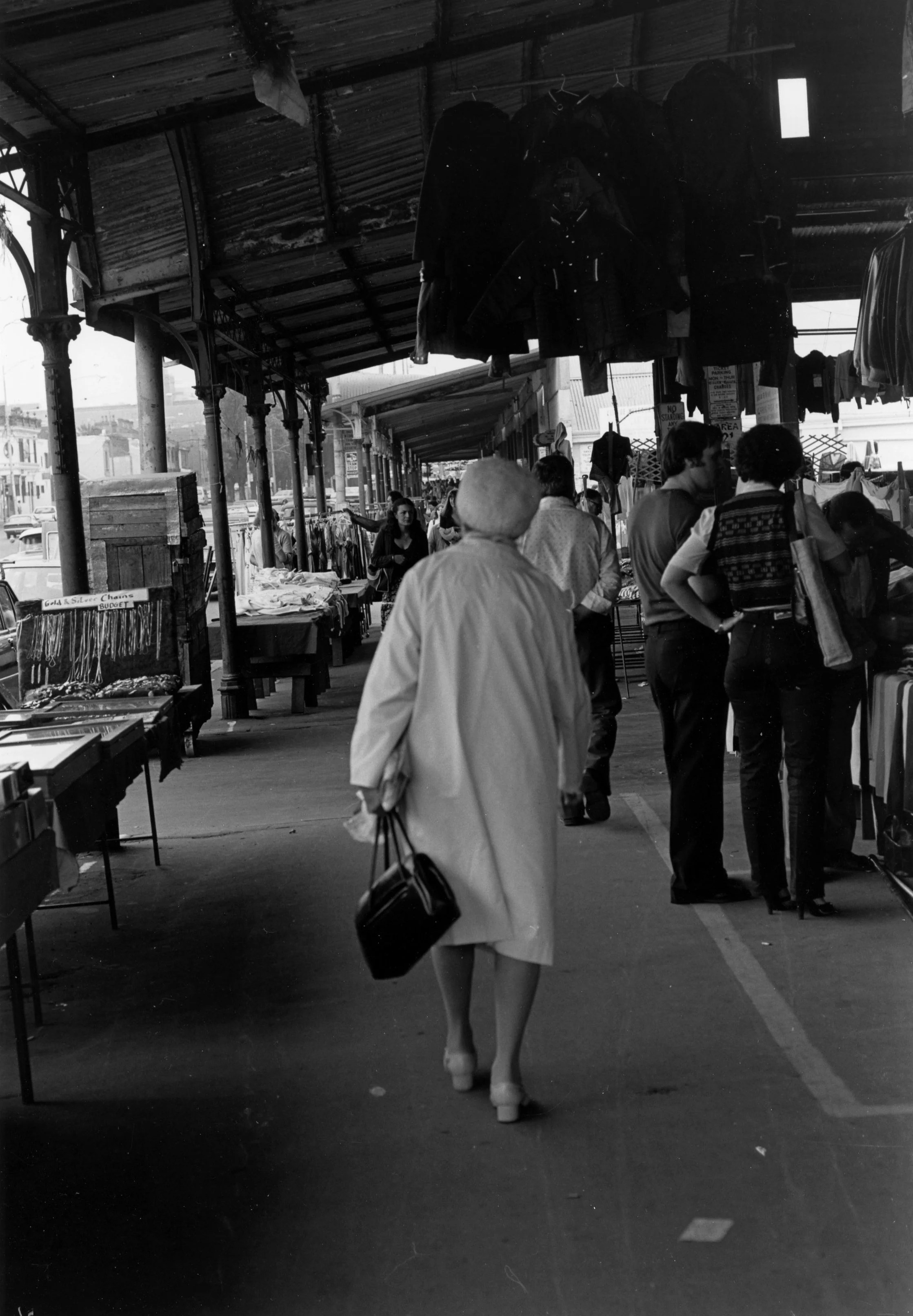
All dressed up for market day
Sharp focus isolates the solitary figure at the Queen Victoria Market, transforming everyday movement into form.
Like Cunningham, clarity and tonal precision reveal quiet sensuality and structure within ordinary urban life.
Purchase a copy of this print
Paul Strand (1890-1976)
Pioneered modernist photography with abstract compositions and direct street portraits.
Strand moved photography toward realism and social engagement. His work bridged art and documentary, shaping photographic language through clarity, structure, and respect for subjects.
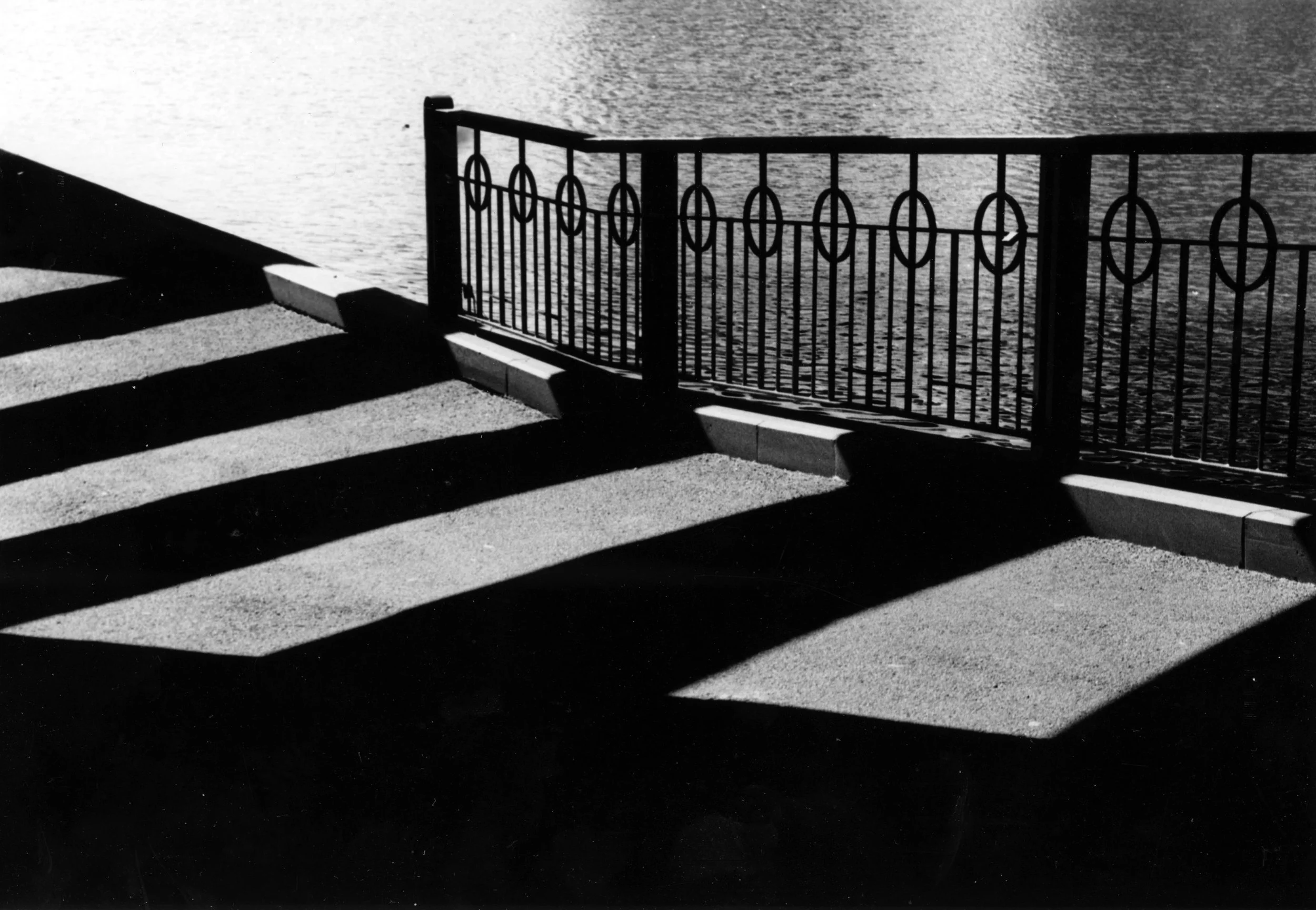
Structure and shadow
Strong geometry and stark contrast reduce the Flinders Walk scene to structure. Like Strand, clarity and abstraction merge, transforming an ordinary urban scene into a precise, modernist composition.
Purchase a copy of this print
Bauhaus / new vision (1920s–1930s)
Developed within the Bauhaus, New Vision photography embraced experimentation, unusual perspectives, photomontage, and abstraction. It aligned photography with modern design and industry, exploring light, form, and technology. The movement redefined visual communication, influencing graphic design, architecture and photographic education globally.
Germaine Krull (1897-1983)
Explored industrial structures and urban life through dynamic angles and experimental compositions.
Her approach expanded photographic language, influencing avant-garde photography and redefining it’s role within modern visual culture.
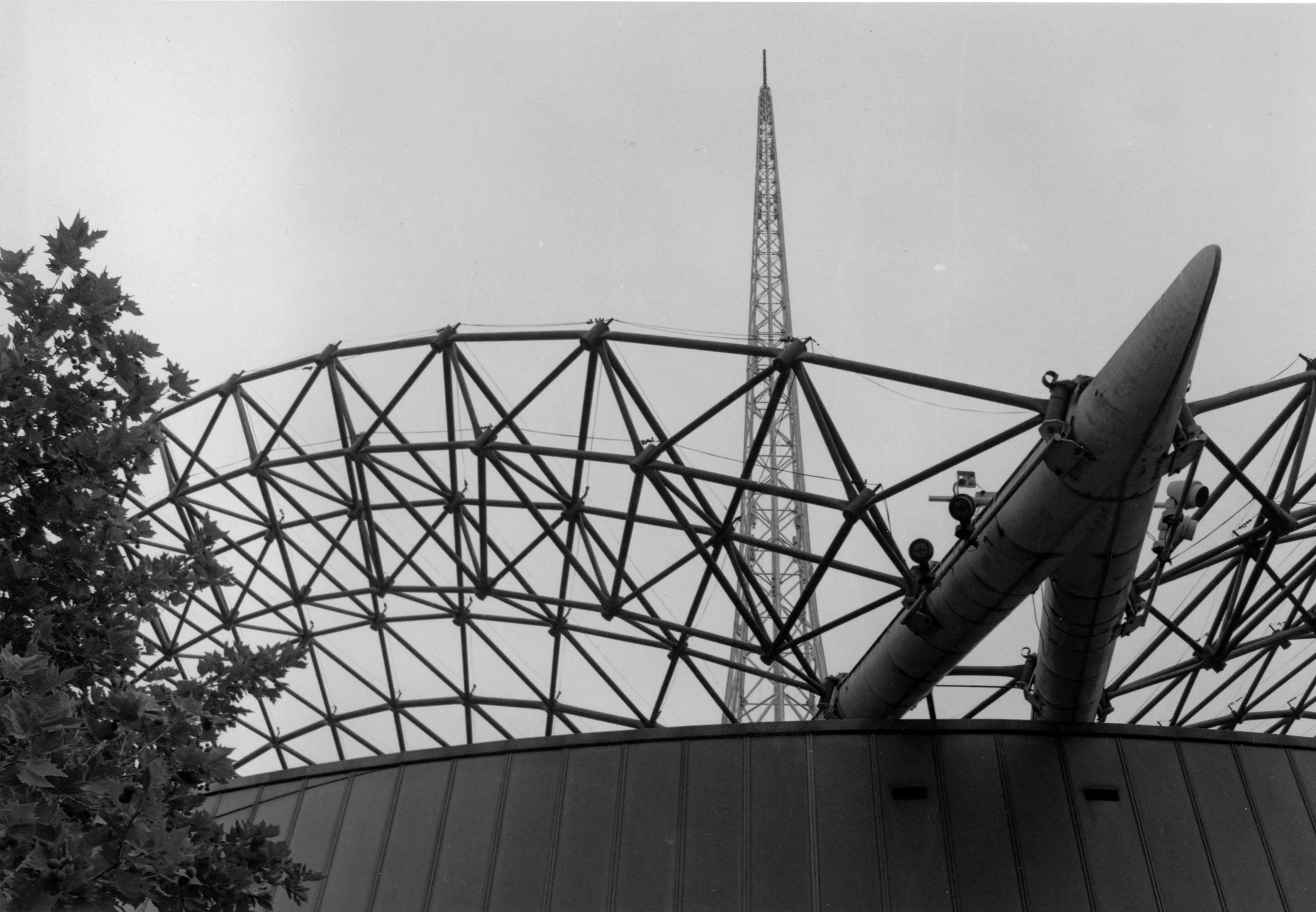
Vertical tension
Dynamic angles and intersecting structures transform the Arts Centre into industrial form.
Like Krull, unconventional perspective and energy elevate architecture into a bold, modernist vision of the city.
Purchase a copy of this print
Aaron Siskind (1903–1991)
Focused on textures and abstraction.
His work was central in the American continuation of the Bauhaus photography movement. Siskind became a defining leader and educator at the New Bauhaus (later known as the Institute of Design) in Chicago.
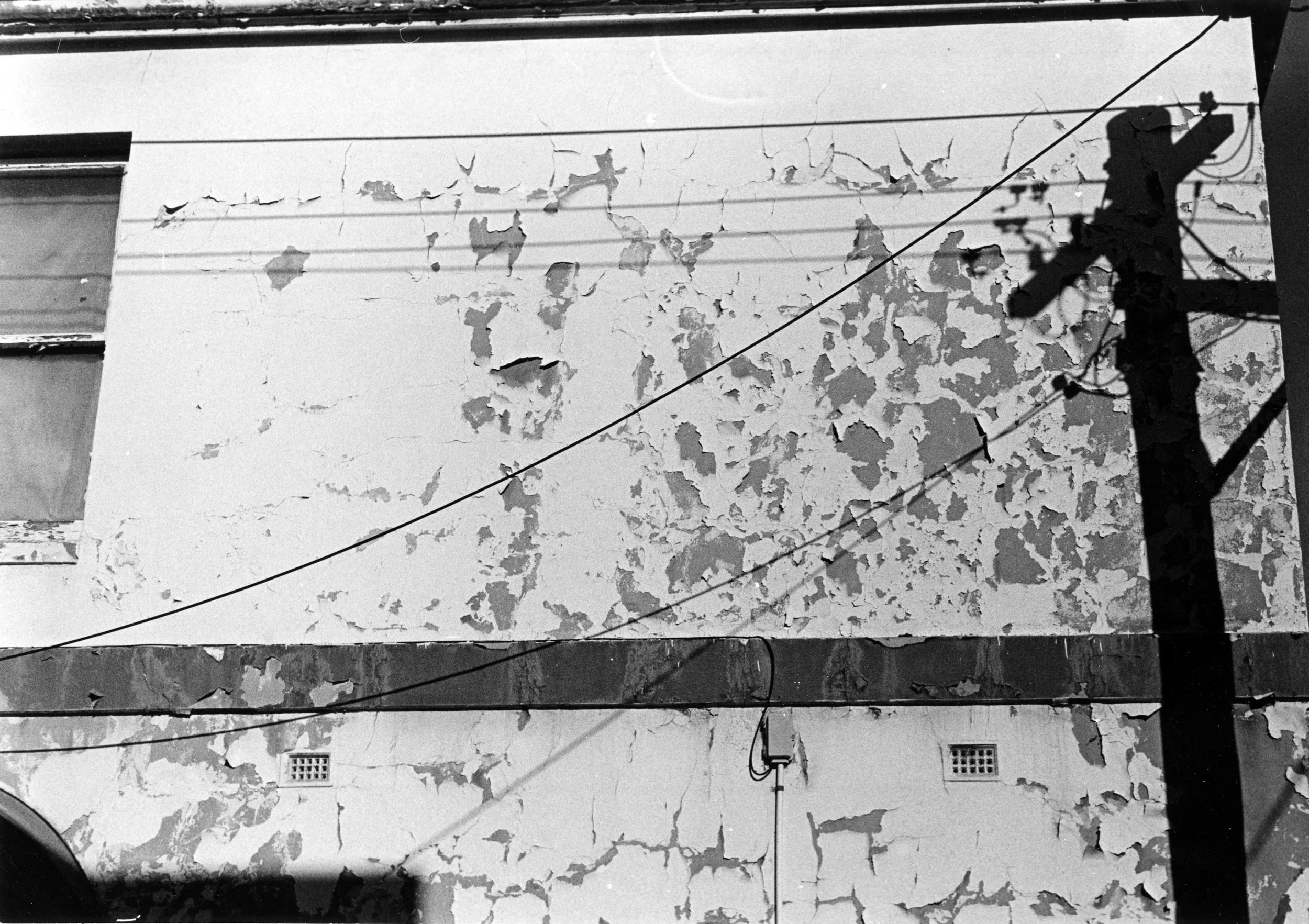
Urban fragments
Peeling walls, graphic lines, and fractured surfaces reduce the urban scene to formal abstraction.
Like Siskind, the image extends Bauhaus ideas through texture, structure, and expressive composition.
Purchase a cop of this print
Surrealism (1920s–1940s)
Surrealist photography explored dreams, chance, and the unconscious mind. Artists used techniques like solarisation, collage, and staged imagery to create irrational or uncanny scenes. The movement expanded photography beyond documentation, emphasising imagination, symbolism, and psychological depth within the broader Surrealist art movement.
Man Ray (1890–1976)
A leading Dada and Surrealist artist.
Ray used photography experimentally through techniques like rayographs, blurring boundaries between photography and art.
He expanded the medium’s conceptual potential, showing it could move beyond documentation into abstraction and imagination.
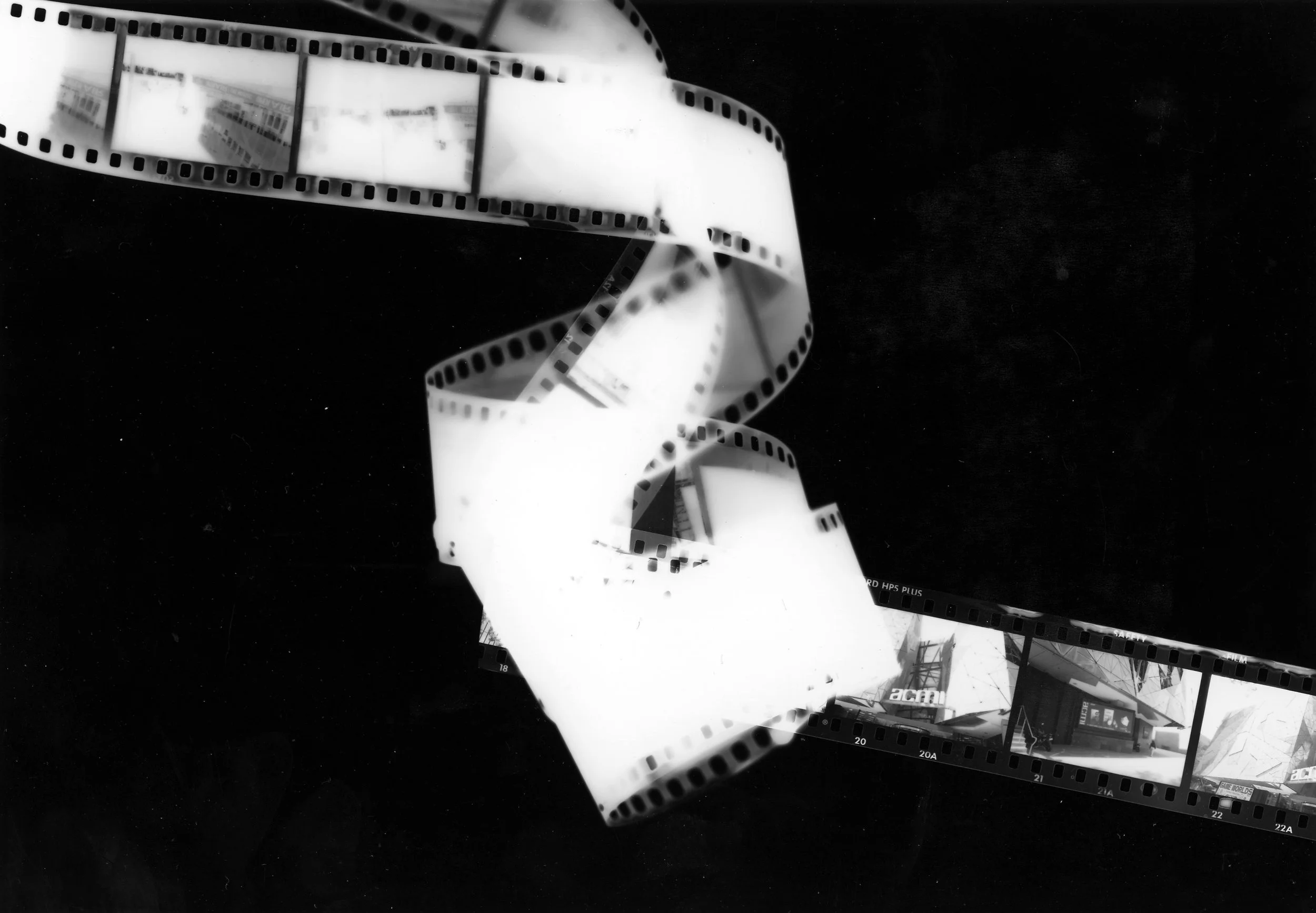
Abstract projection
Film becomes light and abstraction, dissolving narrative into form. Like Man Ray, experimental process transforms ACMI into a surreal composition where photography shifts from documentation to imagination.
Purchase a copy of this print
Lee Miller (1907-1977)
Merged artistic experimentation with powerful photojournalism.
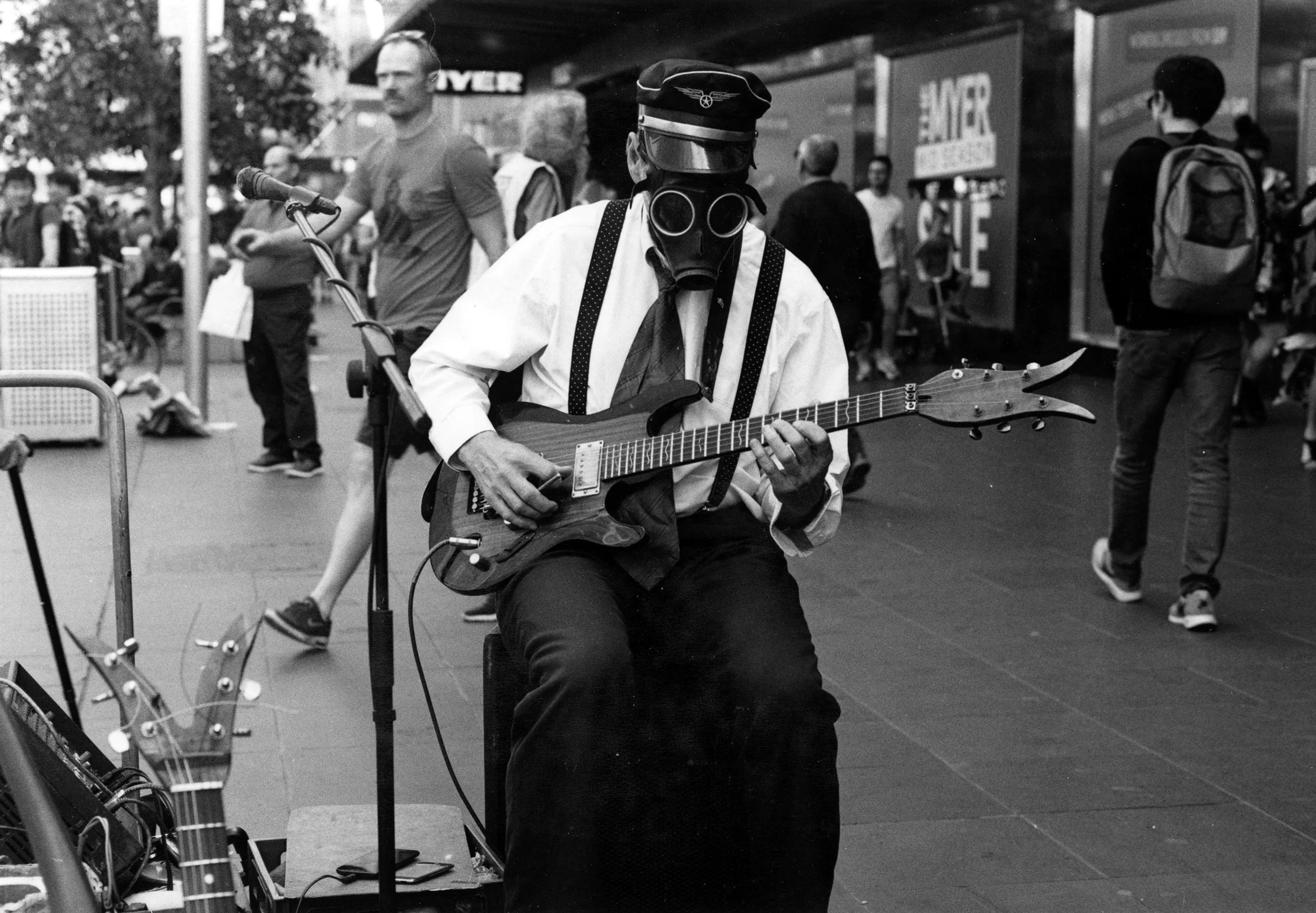
Miller transforms everyday street performance into unsettling theatre. It reveals the strange and irrational beneath ordinary public life, where costume, gesture, and anonymity create psychological tension and ambiguity.
Unsettling theatre
The masked street musician transforms everyday performance into unsettling theatre.
Like Miller, the image merges surreal visual tension with documentary observation; strangeness within ordinary public life.
Purchase a copy of this print
Social documentary (1930s–1950s)
This movement focused on everyday life, social conditions, and human dignity. Documentary photographers highlighted poverty, labour, and inequality, while humanist photographers emphasised empathy and shared experience. Together, they established photography as a tool for storytelling, social awareness, and emotional connection across diverse communities.
Berenice Abbott (1898–1991)
Documented New York’s transformation in the 1930s through precise, large-format photography.
Influenced by Eugène Atget, Abbott captured urban change with clarity. Her work is vital for defining documentary photography as both artistic and historically informative.
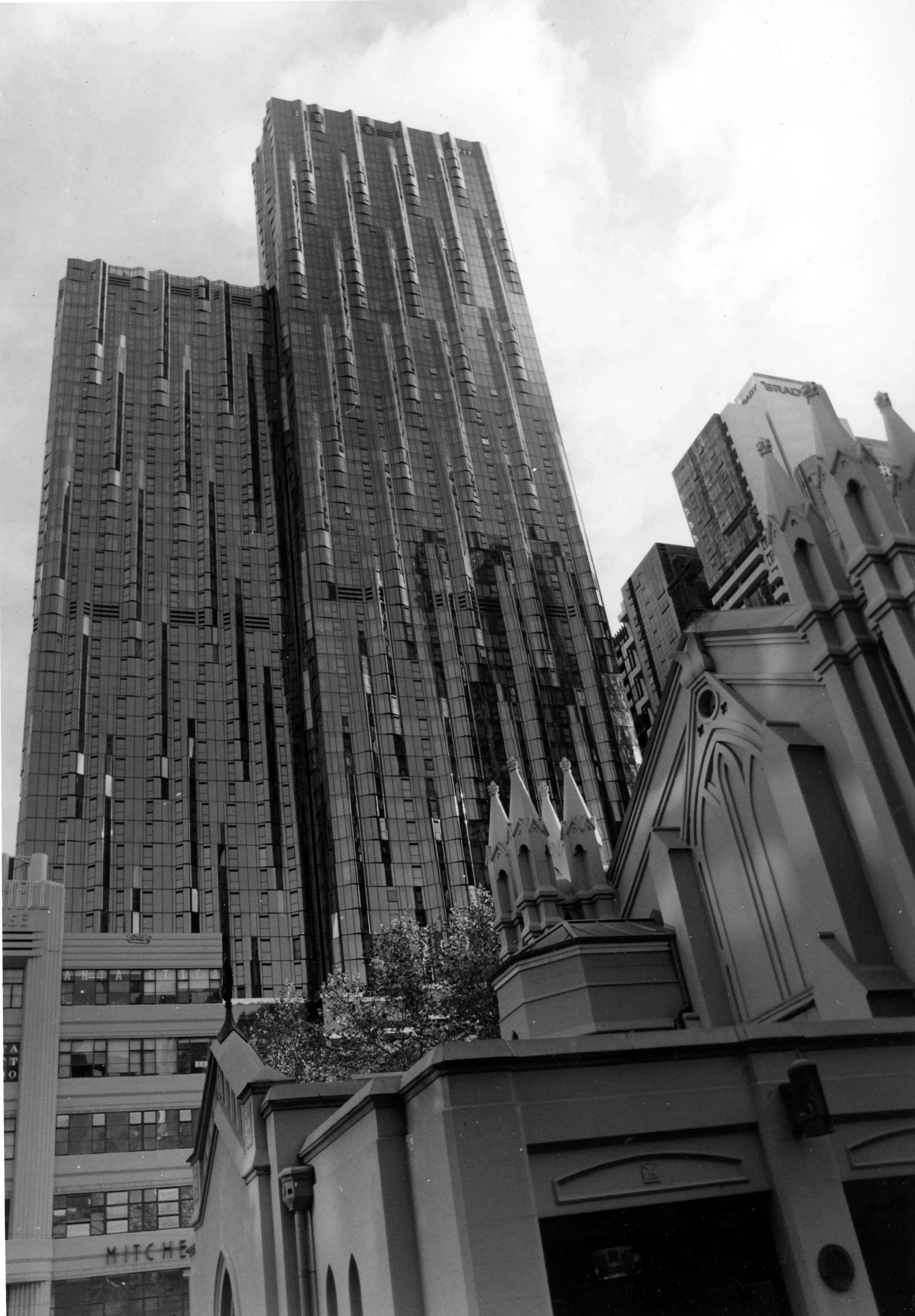
Skyline of excess
The towering modern high-rise beside historic architecture of Melbourne’s first Catholic cathedral reveals a city in transition.
Like Abbott, the image documents urban change with clarity, balancing historical presence against accelerating modern development.
Purchase a copy of this print
Gordon Parks (1912–2006)
Documented race, poverty, and civil rights in America.
Working for Life magazine, Parks used photography as social commentary. He demonstrated photography’s power to challenge injustice and shape public awareness.
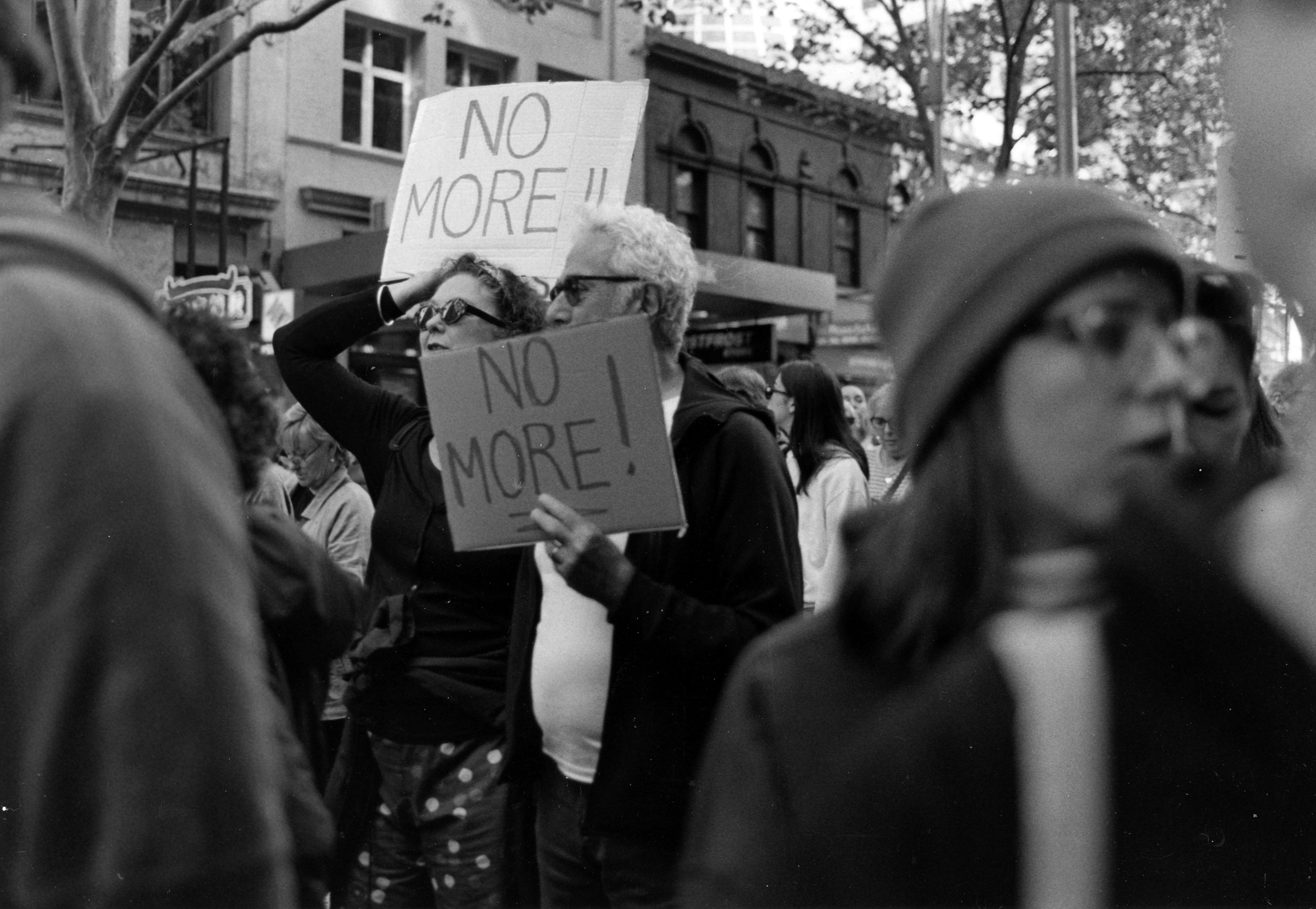
Violence made visible
Public gathering and protest against male violence become acts of collective visibility.
Like Parks, the image uses documentary photography to confront injustice, connecting civic presence with social awareness.
Purchase a copy of this print
Street photography (1930s–1970s)
Street photography captures candid moments in public spaces, emphasising spontaneity, timing, and observation. Photographers focus on gestures, interactions, and urban life. The movement values unpredictability and composition, revealing the rhythms and complexities of everyday human behaviour within cities.
Daido Moriyama (b. 1938)
Known for raw, high-contrast images of postwar Japan.
His “are, bure, boke” (rough, blurred, and out-of-focus) style rejected traditional aesthetics. Moriyama redefined street photography as subjective and fragmented, influencing contemporary visual culture and experimental approaches.
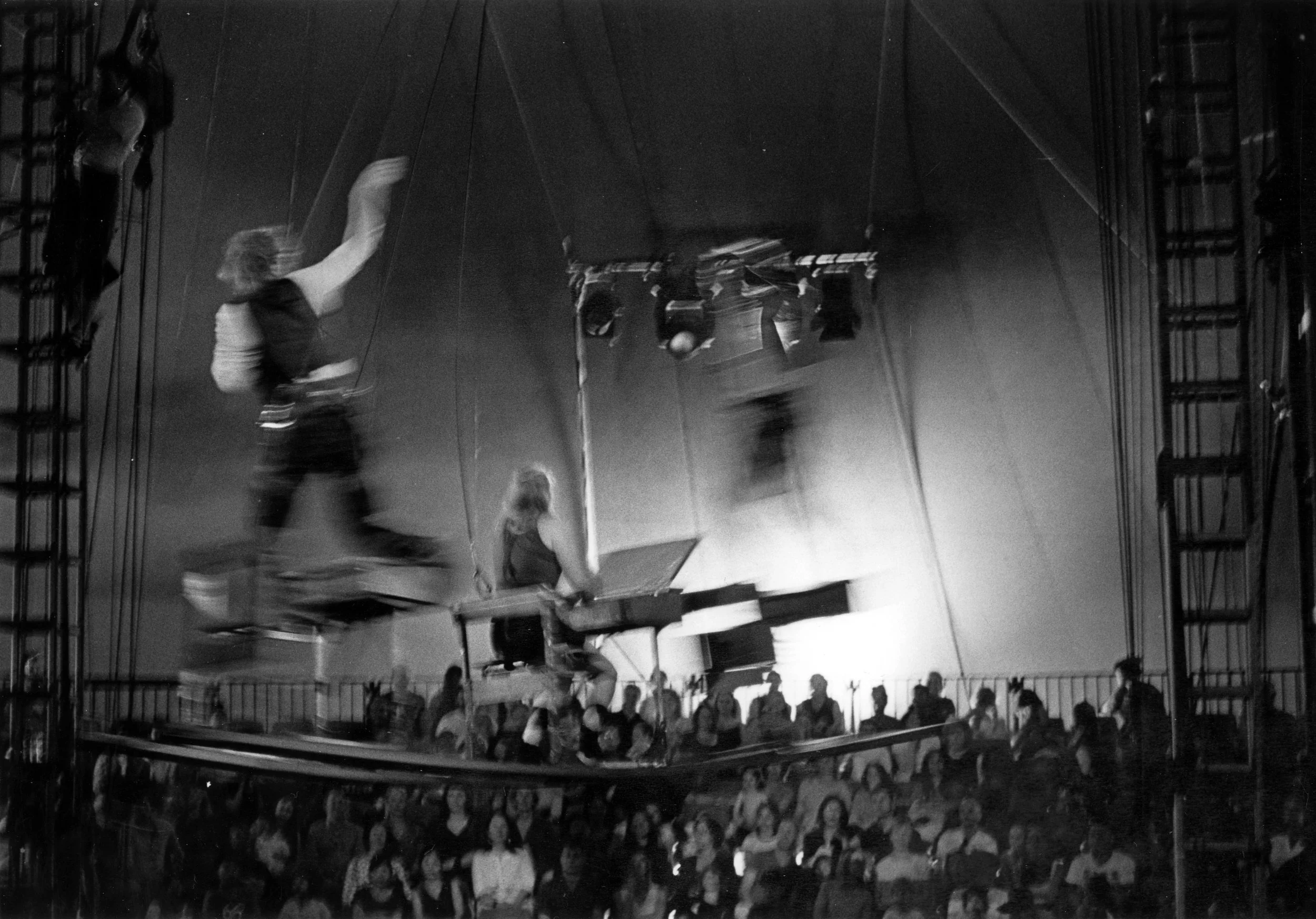
Chaos after dark
Blurred motion and harsh contrast dissolve clarity into sensation at the Royal Botanic Gardens Fire Gardens performance.
Like Moriyama, the image embraces fragmentation and instability, transforming spectacle into a raw, subjective urban experience.
Purchase a copy of this image
Sabine Weiss (1924–2021)
A key figure in French humanist photography, capturing everyday life with warmth and empathy.
Her images emphasised quiet human moments. Weiss contributed to a poetic, accessible vision of photography grounded in shared experience.
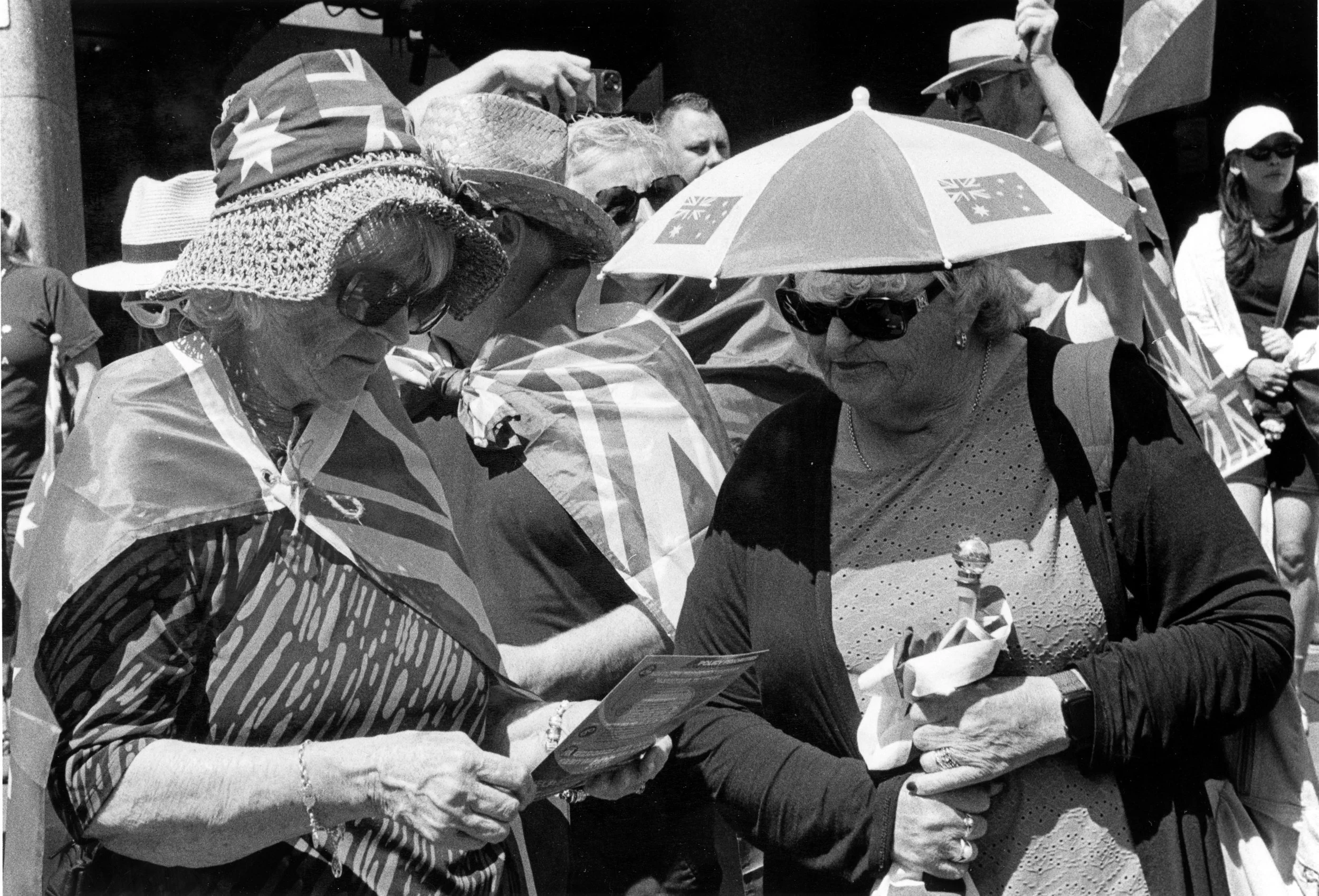
The contested celebration
Everyday interaction and shared attention become quietly human moments.
Like Weiss, the image finds warmth and empathy within public life, revealing connection through ordinary social experience on Australia Day.
Purchase a copy of this image
Concrete photography (late 1950s–1970s)
Concrete photography emphasised the photographic process itself—light, material, and structure—over subject matter. Often aligned with abstract art, it explored repetition, pattern, and visual systems. The movement reduced imagery to essential elements, demonstrating photography’s capacity for formal and conceptual exploration beyond representation.
Lucia Moholy (1894–1989)
Documented Bauhaus architecture and design with exceptional precision, clarity, and tonal control.
Her disciplined modernist compositions transformed buildings and objects into studies of structure and form. These images became defining visual records of the Bauhaus, profoundly shaping how modernism was understood, reproduced, and historically remembered.
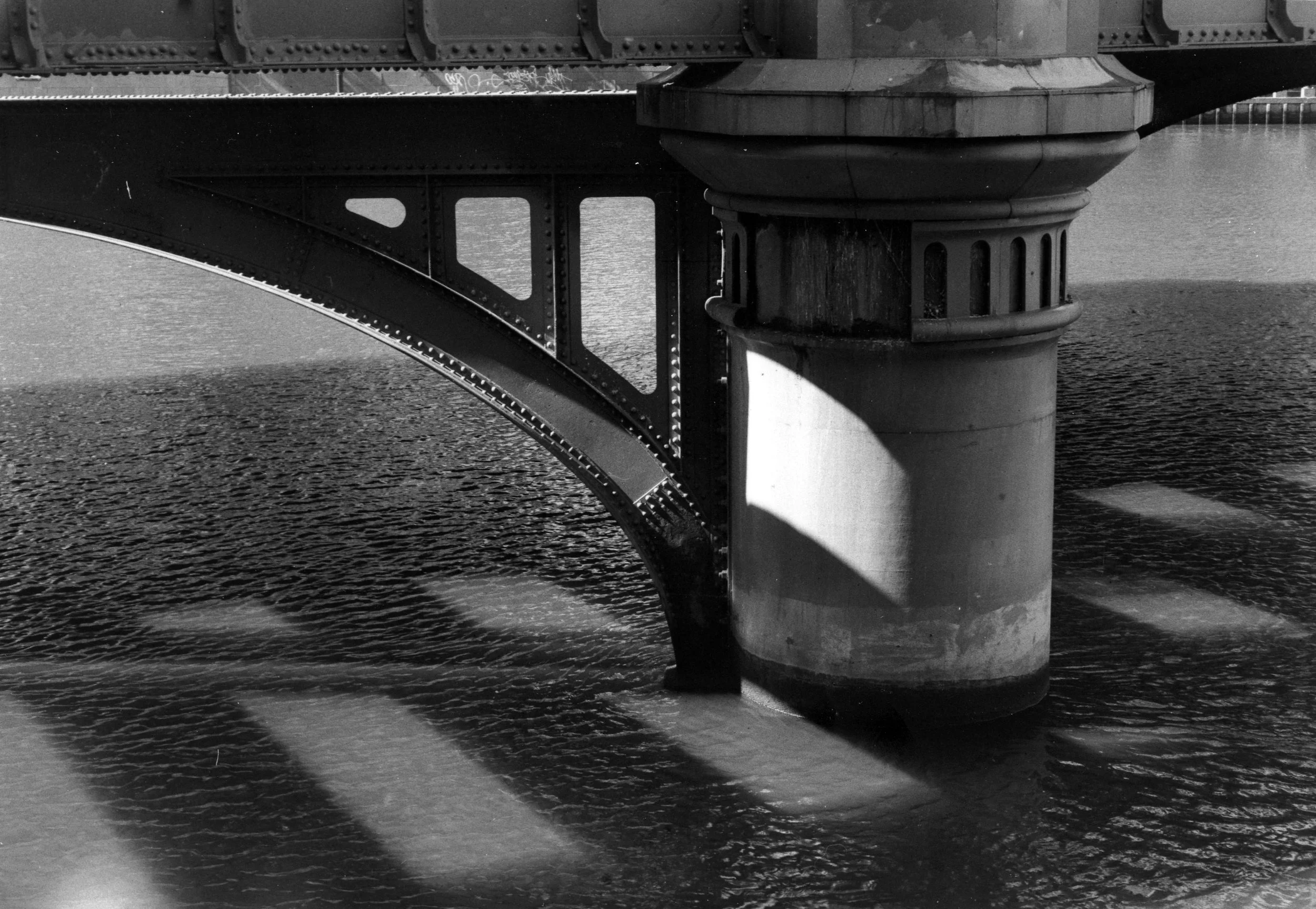
The engineered landscape
Strong geometry, industrial detail, and precise tonal control transform the Sandridge bridge into modernist structure.
Like Moholy, the image documents architecture with clarity, order, and disciplined formal balance.
Purchase a copy of this image
Minor White (1908–1976)
Combined photography with spirituality and teaching.
His abstract images encouraged emotional and symbolic interpretation, expanding photography beyond representation into introspective and meditative experience.
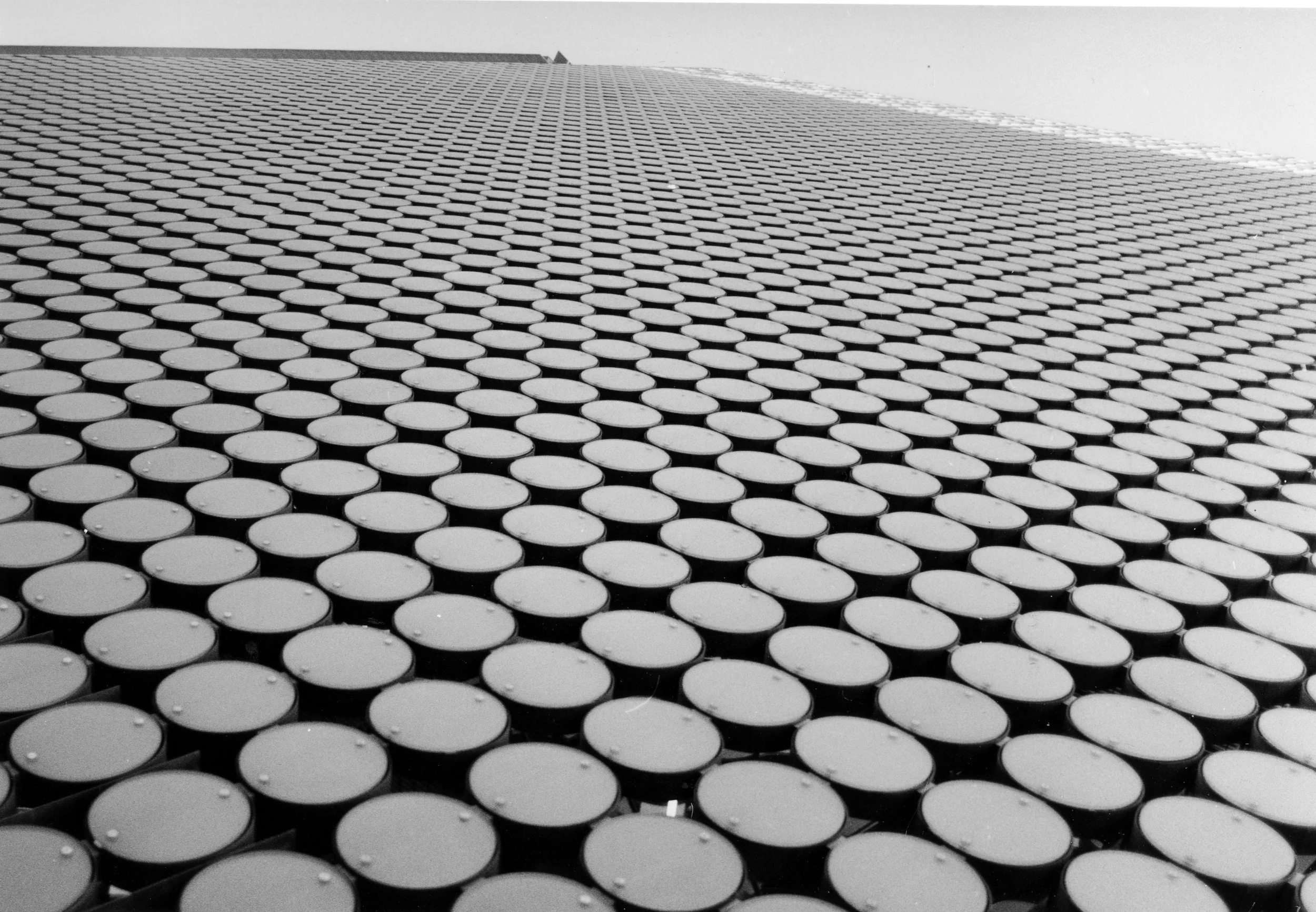
The building watches back
Repetition and tonal subtlety transform the RMIT Design Hub façade into meditative abstraction.
Like White, the image moves beyond architecture, inviting quiet contemplation through rhythm, light, and introspective form.
Purchase a copy of this image
Abstract photography (1910s–1970s)
Abstract photography prioritises form, texture, light, and composition over recognisable subjects. Influenced by modern art movements, photographers created images resembling painting or sculpture. It expanded photography’s expressive possibilities, showing the medium could function independently of documentation and engage with purely visual ideas..
Florence Henri (1893–1982)
Explored mirrors, reflections, geometry, and fragmented space to challenge traditional photographic perspective.
Associated with Bauhaus modernism, she transformed everyday objects and architecture into abstract compositions, using layered visual structures to redefine spatial perception.
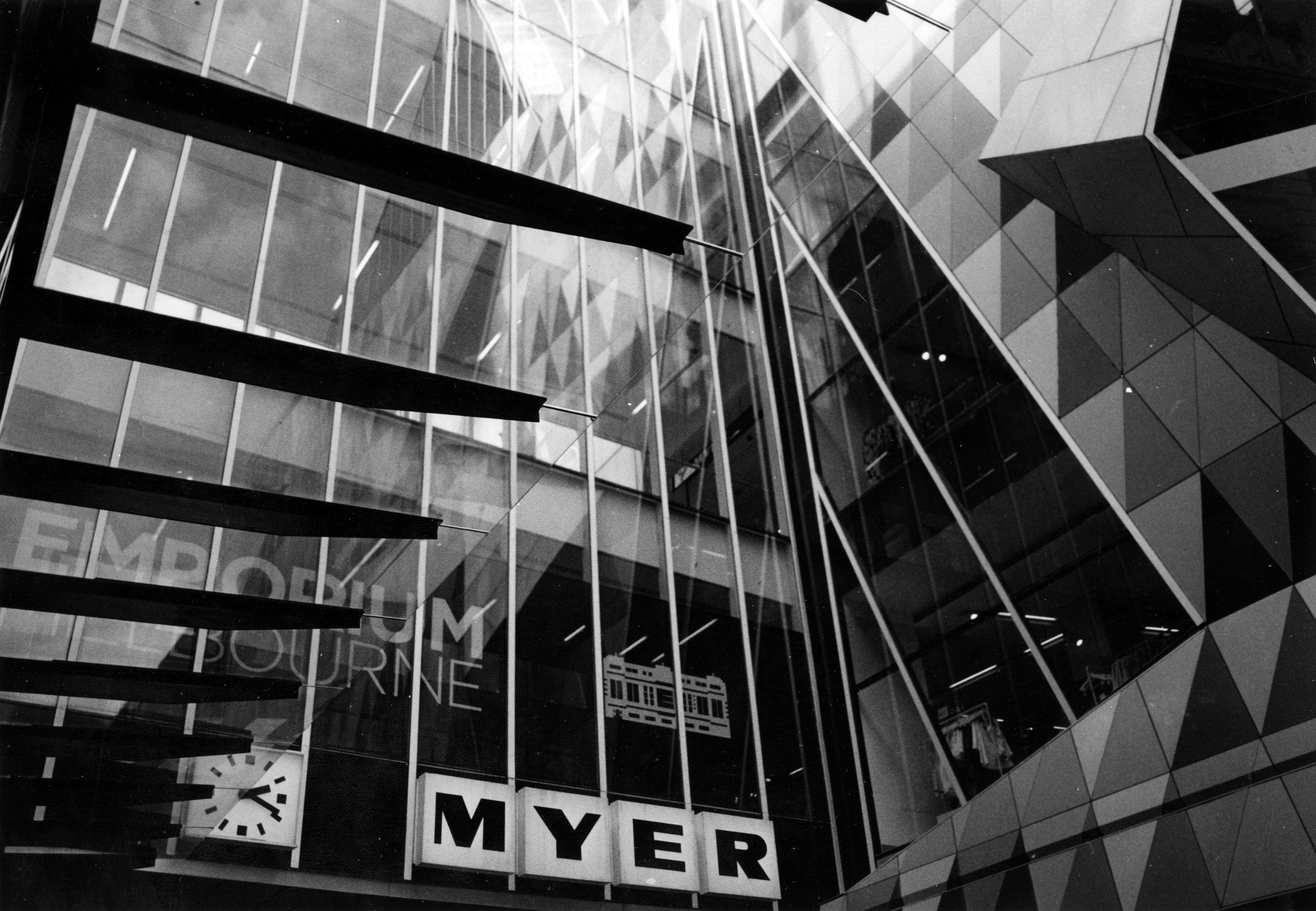
Reflections of consumerism
Fragmented reflections, sharp geometry, and layered surfaces of the Myer pedestrian bridge dissolve the building into abstract composition, typical of Henri’s work
Purchase a copy of this print.
Lee Friedlander (b. 1934)
Evolved an influential and often imitated visual language of urban “social landscape,”.
Many of Friedlander’s photographs included fragments of store-front reflections, structures framed by fences, posters and street signs.
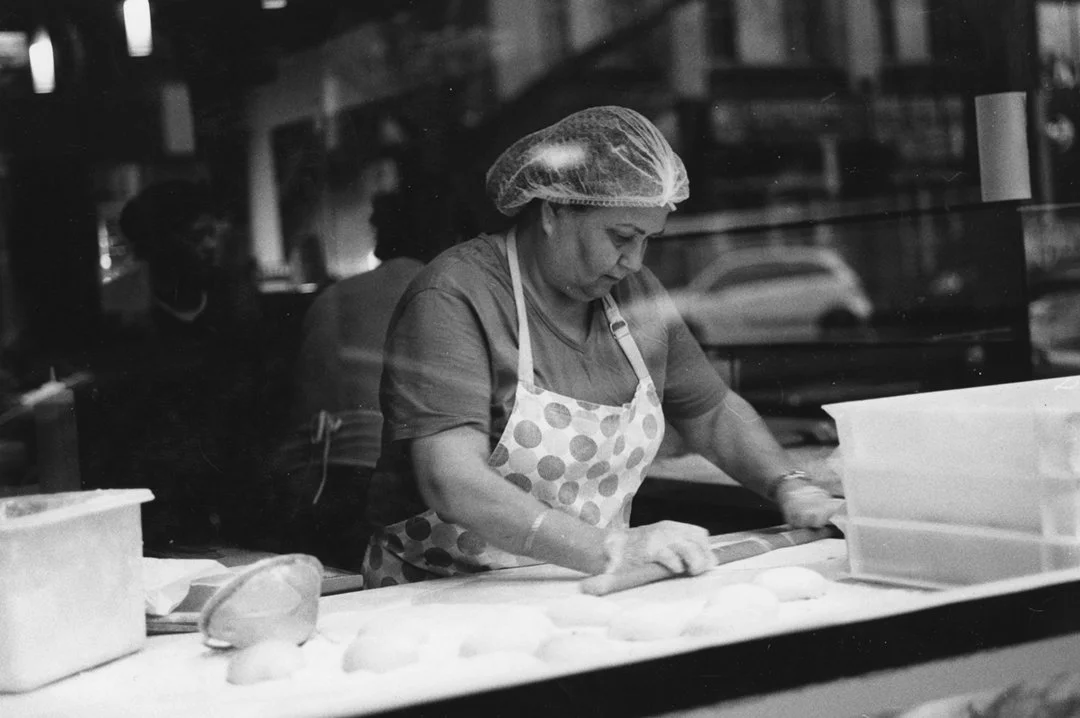
The city consumes
Reflections and layered visibility merge interior and exterior space into a fragmented urban moment at Borak Bakehouse.
Like Friedlander, the image transforms everyday observation into complex, overlapping photographic composition.
Purchase a copy of this print
The new document (1960s–1970s)
New Documents shifted documentary photography toward personal perspective, focusing on relationships and everyday interactions rather than objective reporting.
It redefined documentary as subjective and interpretive.
Judith Joy Ross (b. 1946)
Created contemplative portraits of everyday people.
Her purpose is to observe and record human experience, requiring a spontaneous redefined relationship between photographer and subject.
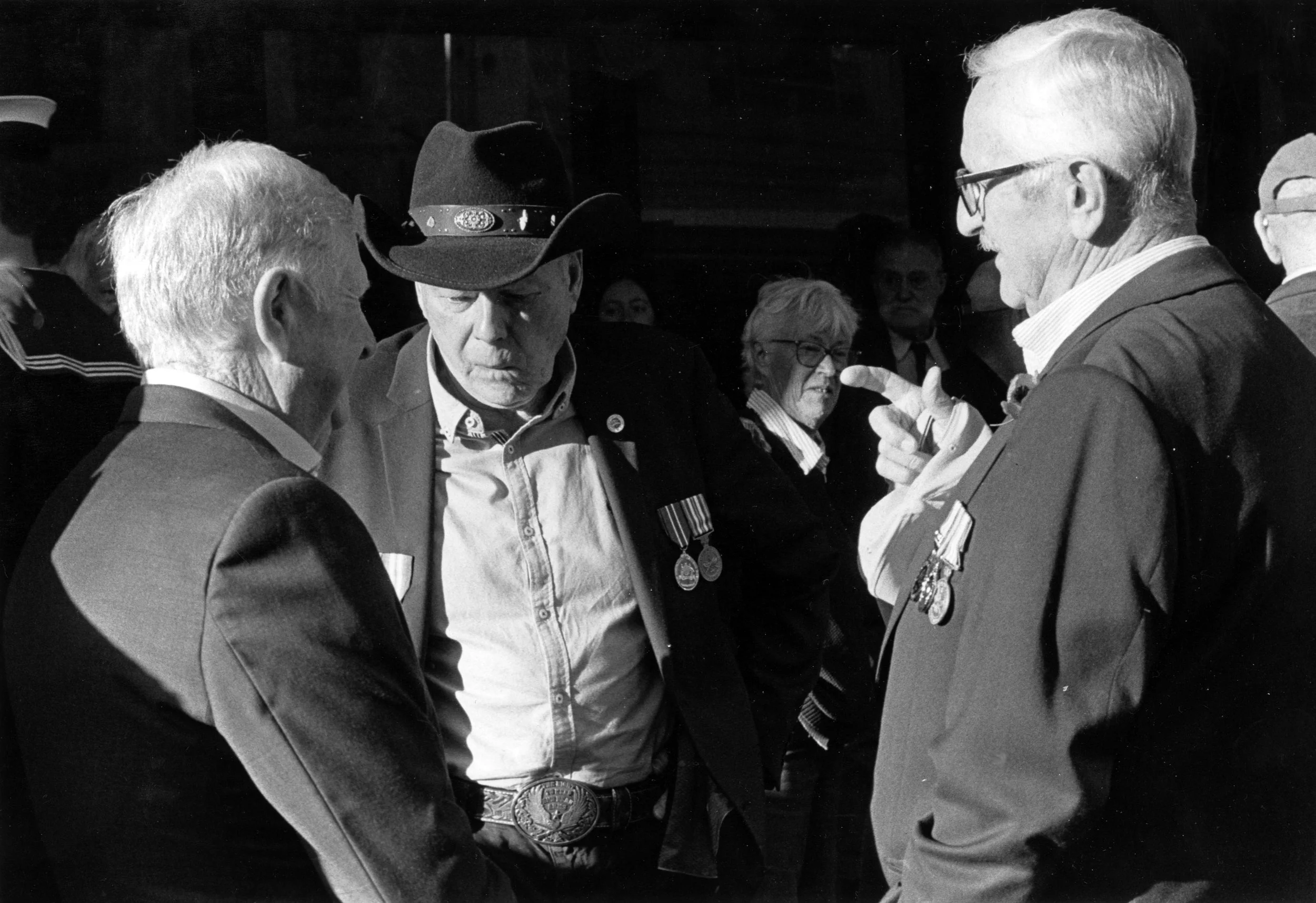
Campaigns won and lost; preparation for Anzac Day march
Strong light and quiet gesture isolate moments of reflection and presence in preparation for the Anzac Day march.
Like Ross, the image transforms ordinary people into contemplative portraits charged with psychological depth and human dignity.
Purchase a copy of this print
Andre Kertesz
Staircases served as a frequent subject offering the perfect intersection of geometry, architectural rhythm, and human movement.
He utilised stairways to create abstract patterns, deep shadows, and poignant urban scenes.
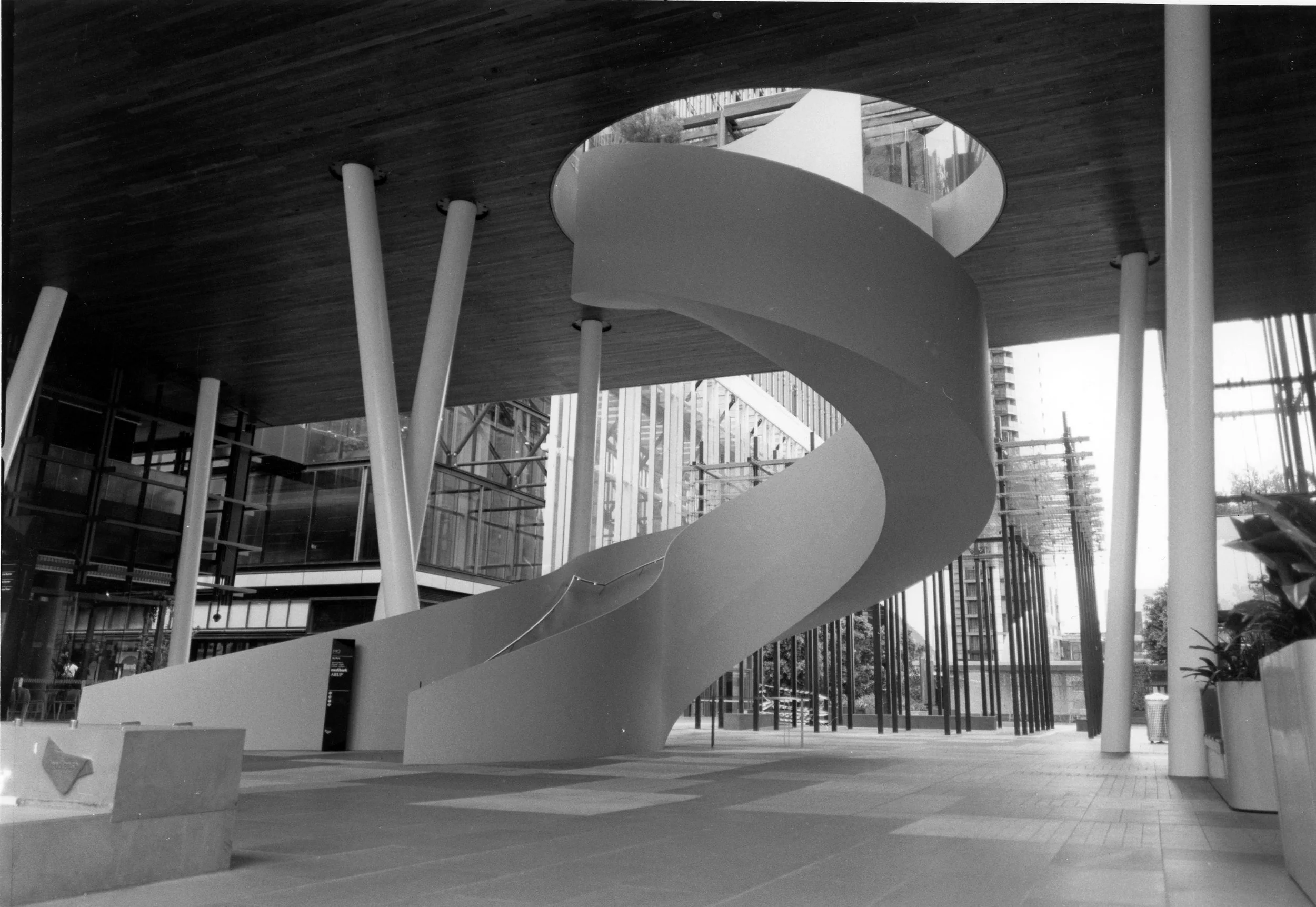
Entrance to influence
Sweeping architectural curves and controlled light transform the Channel Seven HQ entrance staircase into lyrical geometry.
Like Kertész, the image finds poetry within structure, balancing abstraction, elegance, and quiet emotional resonance.
Purchase a copy of this print
New topographics (late 1960s–1970s)
Presented a neutral, detached view of human-altered landscapes.
Photographers documented suburban growth and environmental change, redefining landscape photography.
It pivoted from romanticised wilderness to stark, objective documentation of human-altered environments, such as suburban sprawl, industrial parks, and parking lots.
Judith Turner (1938–2016)
Explored architectural abstraction through layered spatial compositions and precise tonal control.
Her photographs transformed buildings into studies of geometry, perception, and visual tension, expanding photography’s relationship with modern architecture.
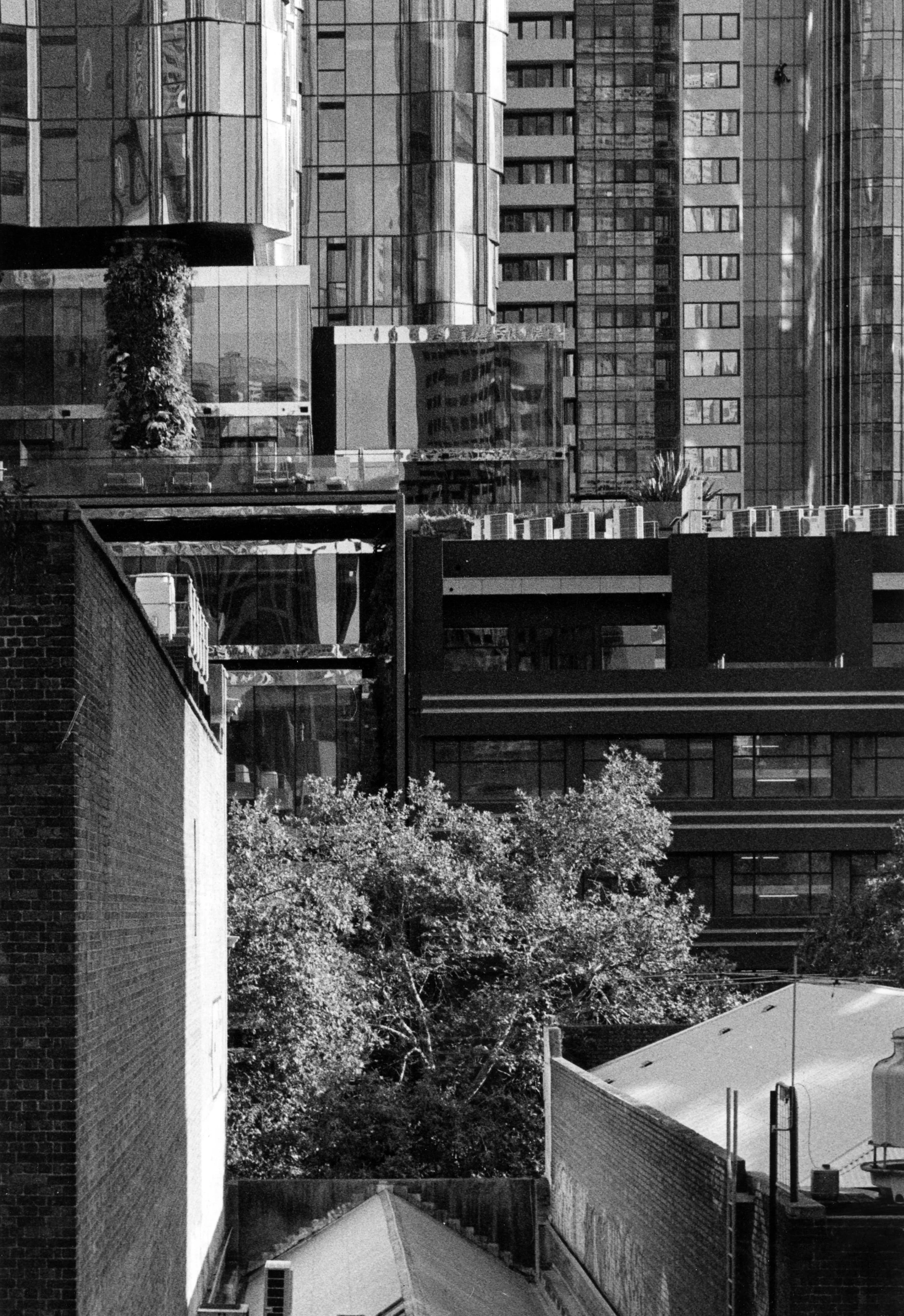
Melbourne under pressure
Layered buildings and compressed space transform Melbourne into abstract structure in the north of Lonsdale (NOLON) precinct.
Like Turner, the image explores architecture through spatial tension, geometry, and the perception of constructed form.
Purchase a copy of this print
Robert Adams (b. 1937)
Photographed the landscape of the American West for more than forty years, concentrating on California, Colorado and Oregon.
His vision is inspired by his joy in nature’s inherent beauty, yet tempered by his dismay at its exploitation and degradation by encroaching urban environments.
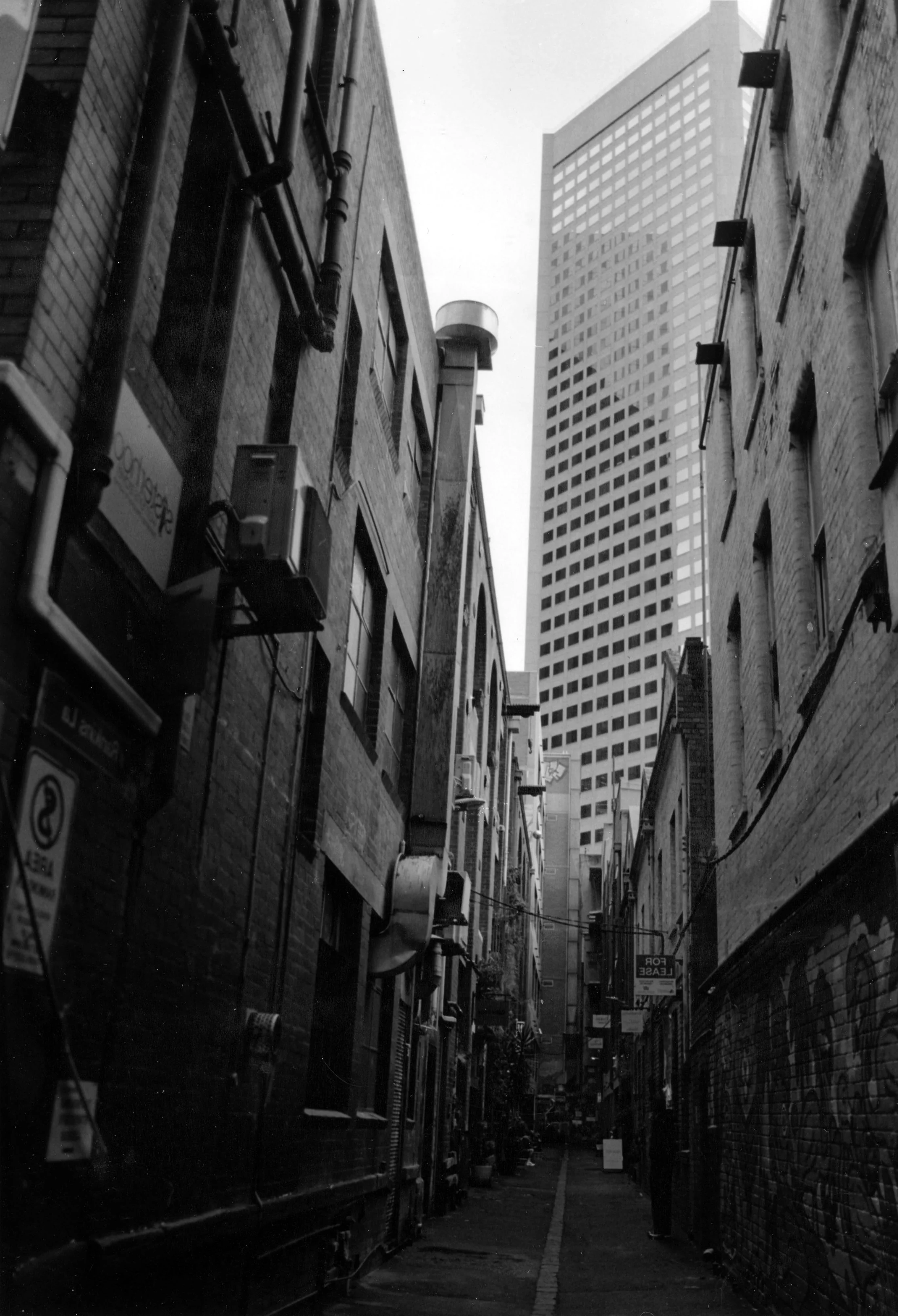
Concrete canyons
Narrow urban space and distant high-rise reveal quiet tension between old and new Melbourne.
Like Adams, the image observes human-altered landscape with restraint, clarity, and subtle unease.
Purchase a copy of this print